



This book examines the political landscape of South Africa from 1934 to 1948, focusing on the ideological conflict between Afrikaner nationalism and policies aimed at conciliation between Afrikaners and English-speaking South Africans. The Union of South Africa, founded in 1910, unified the country under a government heavily influenced by British principles but also included leaders from the former Boer republics. Early South African politics became a struggle between two major political ideologies: one that promoted Afrikaner nationalism, advocating for Afrikaner cultural and political interests, and another that supported "conciliation," a philosophy attempting to bridge ethnic divides and foster unity among white South Africans.
The book highlights that conciliation parties faced significant challenges in gaining long-term Afrikaner support, as they needed to balance competing interests between English-speaking South Africans and Afrikaners, who felt a strong sense of ethnic identity. Afrikaner nationalist parties, however, did not need this balance and could draw on the deep-seated solidarity within their community. The critical turning point in this era, according to the author, was Prime Minister Jan Smuts’ decision in 1939 to align South Africa with Britain in declaring war on Germany. This move alienated a large portion of the Afrikaner electorate, who saw it as a violation of the "South Africa first" principle and contributed significantly to the United Party's waning support.
This estrangement between Afrikaners and conciliation parties, the author argues, set the stage for the rise of the National Party and their victory in 1948, which marked the start of apartheid. While many observers attributed the Nationalist victory to the appeal of apartheid policies, this study suggests that the National Party's success stemmed more fundamentally from the longstanding disillusionment with conciliation policies and the failure of conciliation leaders to create "integrative" solutions that resonated with both Afrikaners and English-speaking South Africans. This historical analysis sheds light on how ethnic divisions and unresolved political conflicts laid the groundwork for South Africa’s mid-20th-century shift toward Afrikaner-dominated governance.
This title is part of UC Press's Voices Revived program, which commemorates University of California Press’s mission to seek out and cultivate the brightest minds and give them voice, reach, and impact. Drawing on a backlist dating to 1893, Voices Revived makes high-quality, peer-reviewed scholarship accessible once again using print-on-demand technology. This title was originally published in 1974.
The book highlights that conciliation parties faced significant challenges in gaining long-term Afrikaner support, as they needed to balance competing interests between English-speaking South Africans and Afrikaners, who felt a strong sense of ethnic identity. Afrikaner nationalist parties, however, did not need this balance and could draw on the deep-seated solidarity within their community. The critical turning point in this era, according to the author, was Prime Minister Jan Smuts’ decision in 1939 to align South Africa with Britain in declaring war on Germany. This move alienated a large portion of the Afrikaner electorate, who saw it as a violation of the "South Africa first" principle and contributed significantly to the United Party's waning support.
This estrangement between Afrikaners and conciliation parties, the author argues, set the stage for the rise of the National Party and their victory in 1948, which marked the start of apartheid. While many observers attributed the Nationalist victory to the appeal of apartheid policies, this study suggests that the National Party's success stemmed more fundamentally from the longstanding disillusionment with conciliation policies and the failure of conciliation leaders to create "integrative" solutions that resonated with both Afrikaners and English-speaking South Africans. This historical analysis sheds light on how ethnic divisions and unresolved political conflicts laid the groundwork for South Africa’s mid-20th-century shift toward Afrikaner-dominated governance.
This title is part of UC Press's Voices Revived program, which commemorates University of California Press’s mission to seek out and cultivate the brightest minds and give them voice, reach, and impact. Drawing on a backlist dating to 1893, Voices Revived makes high-quality, peer-reviewed scholarship accessible once again using print-on-demand technology. This title was originally published in 1974.
Related Products
CONSTRUCTING INCEST STORIES: Black Women's Voices in Fact and Fiction
Publisher : Africa World Press, Inc.
Paperback : 186 pages
ISBN-10 : 1592217117
$24.95
$21.00
ERITREA AND ETHIOPIA: A Front Row Look at Issues of Conflict and the Potential for a Peaceful Resolution
Publisher : Red Sea Press,U.S.; First edition (July 25, 2015)
Paperback : 318 pages
ISBN-10 : 1569024308
$34.95
$27.96
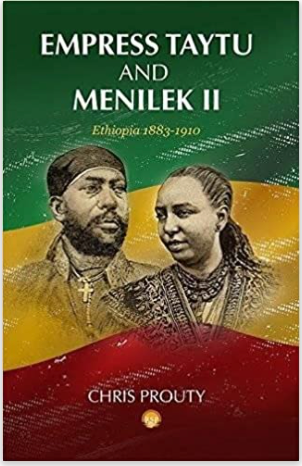
EMPRESS TAYTU AND MENELIK II: Ethiopia 1883-1910
Publisher : Red Sea Press; second edition (November 10, 2016)
Paperback : 430 pages
ISBN-10 : 0932415113
$34.95
$27.96
CHANGING HORIZONS OF AFRICAN HISTORY
Publisher : Africa World Press; First edition (November 1, 2016)
Paperback : 324 pages
ISBN-10 : 1569024987
$34.95
$24.47
On Building A Social Movement
Publisher : Africa World Press, Inc.; First edition (December 22, 2016)
Paperback : 312 pages
ISBN-10 : 1569024618
$34.95
$24.47
METALS IN MANDARA MOUNTAINS’ SOCIETY AND CULTURE
Publisher : Africa World Press, Inc.; First edition (May 25, 2012)
Perfect Paperback : 370 pages
ISBN-10 : 1592218903
$39.95
$27.97
AFRICAN MIGRATIONS RESEARCH Innovative Methods and Methodologies
Paperback : 272 pages
ISBN-10 : 1592218946
$39.95
$29.99