




In 1965 the large, loud, and highly visible tanks of 3rd Platoon, B Company, 3rd Tank Battalion landed across a beach near Da Nang, drawing unwelcome attention to America’s first, almost covert, commitment of ground troops in South Vietnam. As the Marine Corps presence grew inexorably, the 1st and 3rd Tank Battalions, as well as elements of the reactivated 5th Tank Battalion, were committed to the conflict.
For the United States Marine Corps, the protracted and bloody struggle was marked by controversy, but for Marine Corps tankers, it was marked by bitter frustration as they saw their own high levels of command turn their backs on some of the hardest-won lessons of tank-infantry cooperation learned in the Pacific War and in Korea.
Nevertheless, like good Marines, the officers and enlisted men of the tank battalions sought out the enemy in the sand dunes, jungles, mountains, paddy fields, tiny villages, and ancient cities of Vietnam. Young Marine tankers fresh out of training, and cynical veterans of the Pacific War and Korea, battled two enemies. The battle-hardened Viet Cong were masters of the art of striking hard, then slipping away to fight another day. The highly motivated troops of the North Vietnamese Army, equipped with long-range artillery and able to flee across nearby borders into sanctuaries where the Marines were forbidden to follow, engaged the Marines in brutal conventional combat. Both foes were equipped with modern anti-tank weapons, and sought out the tanks as valuable symbolic targets.
It was a brutal and schizophrenic war, with no front and no rear, absolutely no respite from constant danger, against a merciless foe hidden among a helpless civilian population. Some of the duties the tankers were called upon to perform were long familiar, as they provided firepower and mobility for the suffering infantry in a never-ending succession of search and destroy operations, conducted amphibious landings, and added their heavy guns to the artillery in fire support missions. Under constant threat of ambushes and huge command-detonated mines that could obliterate tank and crew in an instant, the tankers escorted vital supply convoys, and guarded the engineers who built and maintained the roads. In their “spare time” the tankers guarded lonely bridges and isolated outposts for weeks on end, patrolled on foot to seek out the Viet Cong, operated roadblocks and ambushes, shot up boats to interdict the enemy’s supply lines, and worked in the villages and hamlets to better the lives of the brutalized civilians.
To the bitter end—despite the harsh conditions of climate and terrain, confusion, endless savage and debilitating combat, and ultimate frustration as their own nation turned against the war—the Marine tankers routinely demonstrated the versatility, dedication to duty, and matchless courage that Americans have come to expect of their Marines.
OSCAR E. GILBERT, Ph.D., is a former marine artilleryman and currently a geoscientist living in Texas. His previous published works include the widely acclaimed “Marine Tank Battles in the Pacific” (2001) and “Marine Corps Tank Battles in Korea” (2003).
Table of Contents
PREFACE
ACKNOWLEDGMENTS
PROLOGUE
1 TWO THOUSAND YEARS OF WAR
2 1965: TAKING MEASURE
3 1966: THE NVA MOVES SOUTH
4 1967: A GROWING MOMENTUM
5 1968: CRISIS AND DECISION
6 1969: ON THE ROPES
7 1970–1975: WITHDRAWAL AND FINAL SPASMS
EPILOGUE
WHERE ARE THEY NOW?
CHAPTER NOTES
REFERENCES AND BIBLIOGRAPHY
INDEX
For the United States Marine Corps, the protracted and bloody struggle was marked by controversy, but for Marine Corps tankers, it was marked by bitter frustration as they saw their own high levels of command turn their backs on some of the hardest-won lessons of tank-infantry cooperation learned in the Pacific War and in Korea.
Nevertheless, like good Marines, the officers and enlisted men of the tank battalions sought out the enemy in the sand dunes, jungles, mountains, paddy fields, tiny villages, and ancient cities of Vietnam. Young Marine tankers fresh out of training, and cynical veterans of the Pacific War and Korea, battled two enemies. The battle-hardened Viet Cong were masters of the art of striking hard, then slipping away to fight another day. The highly motivated troops of the North Vietnamese Army, equipped with long-range artillery and able to flee across nearby borders into sanctuaries where the Marines were forbidden to follow, engaged the Marines in brutal conventional combat. Both foes were equipped with modern anti-tank weapons, and sought out the tanks as valuable symbolic targets.
It was a brutal and schizophrenic war, with no front and no rear, absolutely no respite from constant danger, against a merciless foe hidden among a helpless civilian population. Some of the duties the tankers were called upon to perform were long familiar, as they provided firepower and mobility for the suffering infantry in a never-ending succession of search and destroy operations, conducted amphibious landings, and added their heavy guns to the artillery in fire support missions. Under constant threat of ambushes and huge command-detonated mines that could obliterate tank and crew in an instant, the tankers escorted vital supply convoys, and guarded the engineers who built and maintained the roads. In their “spare time” the tankers guarded lonely bridges and isolated outposts for weeks on end, patrolled on foot to seek out the Viet Cong, operated roadblocks and ambushes, shot up boats to interdict the enemy’s supply lines, and worked in the villages and hamlets to better the lives of the brutalized civilians.
To the bitter end—despite the harsh conditions of climate and terrain, confusion, endless savage and debilitating combat, and ultimate frustration as their own nation turned against the war—the Marine tankers routinely demonstrated the versatility, dedication to duty, and matchless courage that Americans have come to expect of their Marines.
OSCAR E. GILBERT, Ph.D., is a former marine artilleryman and currently a geoscientist living in Texas. His previous published works include the widely acclaimed “Marine Tank Battles in the Pacific” (2001) and “Marine Corps Tank Battles in Korea” (2003).
Table of Contents
PREFACE
ACKNOWLEDGMENTS
PROLOGUE
1 TWO THOUSAND YEARS OF WAR
2 1965: TAKING MEASURE
3 1966: THE NVA MOVES SOUTH
4 1967: A GROWING MOMENTUM
5 1968: CRISIS AND DECISION
6 1969: ON THE ROPES
7 1970–1975: WITHDRAWAL AND FINAL SPASMS
EPILOGUE
WHERE ARE THEY NOW?
CHAPTER NOTES
REFERENCES AND BIBLIOGRAPHY
INDEX
Related Products
GOLDEN AGE OF THE MOOR BY IVAN VAN SERTIMA AND RUNOKO RASHIDI
UNITED BLACK LIBRARY EDITIONSISBN: 9781943138494PAPERBACK: 480 PAGES
$24.95

Blueprint for Black Power: A Moral, Political, and Economic Imperative for the Twenty-First Century / Paperback
Paperback: 889 pages / paperback
ISBN-13: 9781879164079
ISBN: 1879164078
$52.00
$38.00

Black-On-Black Violence: The Psychodynamics of Black Self-Annihilation in Service of White Domination
Black-on-Black Violence: The Psychodynamics of Black Self-Annihilation in Service of White Domination represents a distinct milestone in criminology and Afrikana Studies. Its explanatory perspectives on the sociopsychological and politicoeconomic causes of Black-on-Black violence are exceptionally insightful, incisive and iconoclastic. The...
$21.00
$13.00

The Willie Lynch Letter And the Making of A Slave (Paperback)
Publisher : African Tree Press
Paperback : 28 pages
ISBN-10 : 1592323065
$5.95
$3.95

THE SECRET RELATIONSHIP BETWEEN BLACKS AND JEWS VOL. 2
The Secret Relationship Between Blacks and Jews is a three-volume work of pseudo-scholarship, published by the Nation of Islam. The first volume, which was released in 1991, asserts that Jews dominated the Atlantic slave trade. The Secret Relationship has been widely criticized for being antisemitic and for failing to provide...
$48.00
$39.95
They Lived Before Adam (Prehistoric Origins of the Igbo The Never Been Ruled) Paperback
The Sensational Book of the Century... They Lived Before Adam delves deep into the valleys of time and showcases the history of the Igbo people Nigeria who have Never been ruled. **Please note: This is an import book and...
$120.00
$74.95
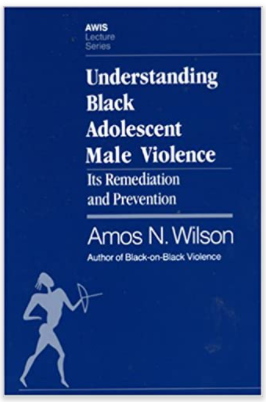
Understanding Black Adolescent Male Violence: Its Remediation and Prevention
Paperback: 92 pages
ISBN-13: 9781879164031
$16.00
$10.00

THEY CAME BEFORE COLUMBUS, AFRICAN PRESENCE IN THE AMERICAS
Publisher : Random House Trade Paperbacks; Reprint edition
September 23, 2003
Paperback : 336 pages
ISBN-13 : 9780812968170
$23.00
$16.00