




The first full treatment of the unique phenomenon of High Commands in the Soviet Army during World War II and the Cold War.
The war on the Eastern Front during 1941–45 was an immense struggle, running from the Barents Sea to the Caucasus Mountains. The vast distances involved forced the Soviet political-military leadership to resort to new organizational expedients in order to control operations along the extended front. These were the high commands of the directions, which were responsible for two or more fronts (army groups) and, along maritime axes, one or more fleets.
In all, five high commands were created along the northwestern, western, southwestern, and North Caucasus strategic directions during 1941–42. However, the highly unfavorable strategic situation during the first year of the war, as well as interference in day-to-day operations by Stalin, severely limited the high commands' effectiveness. As a consequence, the high commands were abolished in mid-1942 and replaced by the more flexible system of supreme command representatives at the front. A High Command of Soviet Forces in the Far East was established in 1945 and oversaw the Red Army's highly effective campaign against Japanese forces in Manchuria.
The Far Eastern High Command was briefly resurrected in 1947 as a response to the tense situation along the Korean peninsula and the ongoing civil war in China, but was abolished in 1953, soon after Stalin's death. Growing tensions with China brought about the recreation of the Far Eastern High Command in 1979, followed a few years later by the appearance of new high commands in Europe and South Asia. However, these new high commands did not long survive the collapse of the Soviet Union in 1991 and were abolished a year later.
The book relies almost exclusively on Soviet and post-communist archival and other sources and is the first unclassified treatment of this subject in any country, East or West.
Table of Contents
Introduction
1. Imperial Antecedents
2. Soviet Antecedents
3. Organizing for War
4. The Northwestern High Command
5. The Western High Command
6. The Southwestern High Command
7. The North Caucasus High Command
8. The Stavka Representatives
9. The Far Eastern High Command
10. The Postwar High Commands
Bibliography
Index
The war on the Eastern Front during 1941–45 was an immense struggle, running from the Barents Sea to the Caucasus Mountains. The vast distances involved forced the Soviet political-military leadership to resort to new organizational expedients in order to control operations along the extended front. These were the high commands of the directions, which were responsible for two or more fronts (army groups) and, along maritime axes, one or more fleets.
In all, five high commands were created along the northwestern, western, southwestern, and North Caucasus strategic directions during 1941–42. However, the highly unfavorable strategic situation during the first year of the war, as well as interference in day-to-day operations by Stalin, severely limited the high commands' effectiveness. As a consequence, the high commands were abolished in mid-1942 and replaced by the more flexible system of supreme command representatives at the front. A High Command of Soviet Forces in the Far East was established in 1945 and oversaw the Red Army's highly effective campaign against Japanese forces in Manchuria.
The Far Eastern High Command was briefly resurrected in 1947 as a response to the tense situation along the Korean peninsula and the ongoing civil war in China, but was abolished in 1953, soon after Stalin's death. Growing tensions with China brought about the recreation of the Far Eastern High Command in 1979, followed a few years later by the appearance of new high commands in Europe and South Asia. However, these new high commands did not long survive the collapse of the Soviet Union in 1991 and were abolished a year later.
The book relies almost exclusively on Soviet and post-communist archival and other sources and is the first unclassified treatment of this subject in any country, East or West.
Table of Contents
Introduction
1. Imperial Antecedents
2. Soviet Antecedents
3. Organizing for War
4. The Northwestern High Command
5. The Western High Command
6. The Southwestern High Command
7. The North Caucasus High Command
8. The Stavka Representatives
9. The Far Eastern High Command
10. The Postwar High Commands
Bibliography
Index
Related Products
GOLDEN AGE OF THE MOOR BY IVAN VAN SERTIMA AND RUNOKO RASHIDI
UNITED BLACK LIBRARY EDITIONSISBN: 9781943138494PAPERBACK: 480 PAGES
$24.95

Blueprint for Black Power: A Moral, Political, and Economic Imperative for the Twenty-First Century / Paperback
Paperback: 889 pages / paperback
ISBN-13: 9781879164079
ISBN: 1879164078
$52.00
$38.00

Black-On-Black Violence: The Psychodynamics of Black Self-Annihilation in Service of White Domination
Black-on-Black Violence: The Psychodynamics of Black Self-Annihilation in Service of White Domination represents a distinct milestone in criminology and Afrikana Studies. Its explanatory perspectives on the sociopsychological and politicoeconomic causes of Black-on-Black violence are exceptionally insightful, incisive and iconoclastic. The...
$21.00
$13.00

The Willie Lynch Letter And the Making of A Slave (Paperback)
Publisher : African Tree Press
Paperback : 28 pages
ISBN-10 : 1592323065
$5.95
$3.95

THE SECRET RELATIONSHIP BETWEEN BLACKS AND JEWS VOL. 2
The Secret Relationship Between Blacks and Jews is a three-volume work of pseudo-scholarship, published by the Nation of Islam. The first volume, which was released in 1991, asserts that Jews dominated the Atlantic slave trade.The Secret Relationship has been widely criticized for being antisemitic and for failing to provide an...
$48.00
$39.95
They Lived Before Adam (Prehistoric Origins of the Igbo The Never Been Ruled) Paperback
The Sensational Book of the Century... They Lived Before Adam delves deep into the valleys of time and showcases the history of the Igbo people Nigeria who have Never been ruled. **Please note: This is an import book and...
$120.00
$74.95
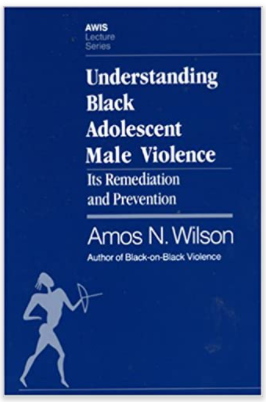
Understanding Black Adolescent Male Violence: Its Remediation and Prevention
Paperback: 92 pages
ISBN-13: 9781879164031
$16.00
$10.00

THEY CAME BEFORE COLUMBUS, AFRICAN PRESENCE IN THE AMERICAS
Publisher : Random House Trade Paperbacks; Reprint edition
September 23, 2003
Paperback : 336 pages
ISBN-13 : 9780812968170
$23.00
$16.00