


U.S. Army Combat Historian and Combat History Operations: World War I to the Vietnam War
ISBN: 9781636243290
"How is history useful for an operational commander or to soldiers in general? What role does history have for doctrine and training to the U.S. Army as an institution? These are questions this book answers as the authors narrate the development combat historian and the evolving role of combat historians as they develop history into a useful tool for informing training, operations, and doctrine development."―New York Journal of Books
In World War I, Major General Pershing proposed the idea of establishing a historical office within the AEF headquarters. The War Department reorganized the General Staff to include a Historical Branch. Evidence shows that soldiers acting as historians went "down range," albeit not into combat. By World War II, the situation had changed—whether S.L.A. Marshall's popping out of a billet in Sibret as a shells exploded on the road; Forrest Pogue's typing "on a little camp desk under an apple tree;" Chester Starr's terrain reconnaissance in the Mediterranean theater, or Ken Hechler's command of a four-man historical team interviewing soldiers at the Remagen Bridge and searching through secret documents—the World War II combat historians were there behind and on the front lines with a notebook in one hand and their carbine in the other hand, ever ready to collect battlefield information.
Eight historical service detachments were deployed to Korea. The youngest commander, 1st Lieutenant Bevin Alexander, noted "We were on the front lines the whole time . . . We would interview the people afterwards and create a battle study…." After the Korean War, the duties of the combat historian further evolved as what became the Center of Military History published doctrine about military history detachments (MHDs). As America’s immersion in Vietnam escalated, there was concern regarding historical coverage. Chief of Military History Brigadier General Hal Pattison established a network of historical teams to collect information on the U.S Army in the war. A major development in the history program and in deploying MHDs came with the establishment of Headquarters, U.S. Army Vietnam (USARV) under General William C. Westmoreland’s command. In 1965, the history office was organized at Headquarters, U.S. Army Vietnam (USARV). MHDs were deployed across Vietnam, conducting combat after action interviews, and collecting documents. This study focuses on U.S. Army historical programs during combat operations from World War I to the Vietnam War with particular attention on the combat historians, those individuals deployed to a theater of war with the mission of documenting the actions of that theater for current and future historical use.
Table of Contents
Acknowledgements
Preface
Chapter 1: World War I and the Beginning of Army Wartime History Operations
Chapter II: Post-World War I Army Military History Operations
Chapter III: Establishing the World War II Army Historical Program
Chapter IV: Training the World War II Combat Historian
Chapter V: Historical Program in the European Theater of Operations
Chapter VI: Army Combat Historians in the Pacific Theater
Chapter VII: Army Combat History Operations in the Mediterranean Theater
Chapter VIII: Post-World War II Army Military History Doctrine
Chapter IX: Korean War and Army Combat History Operations
Chapter X: Post Korean War Army Military History Doctrine
Chapter XI: The Vietnam War and Army Combat History Operations
Epilogue
Appendix A: Marshall's How To Do It for Historical Officers
Bibliography
Endnotes
Index
Related Products
GOLDEN AGE OF THE MOOR BY IVAN VAN SERTIMA AND RUNOKO RASHIDI
UNITED BLACK LIBRARY EDITIONSISBN: 9781943138494PAPERBACK: 480 PAGES
$24.95
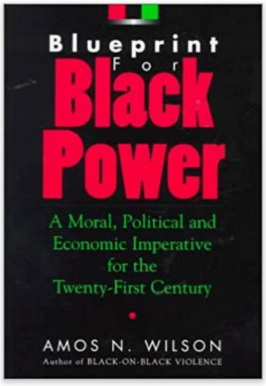
Blueprint for Black Power: A Moral, Political, and Economic Imperative for the Twenty-First Century / Paperback
Paperback: 889 pages / paperback
ISBN-13: 9781879164079
ISBN: 1879164078
$52.00
$40.00
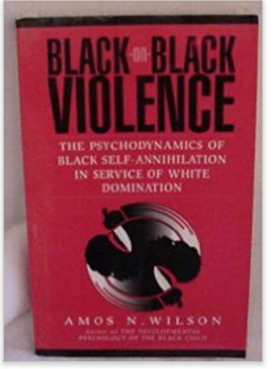
Black-On-Black Violence: The Psychodynamics of Black Self-Annihilation in Service of White Domination
Black-on-Black Violence: The Psychodynamics of Black Self-Annihilation in Service of White Domination represents a distinct milestone in criminology and Afrikana Studies. Its explanatory perspectives on the sociopsychological and politicoeconomic causes of Black-on-Black violence are exceptionally insightful, incisive and iconoclastic. The...
$21.00
$13.00
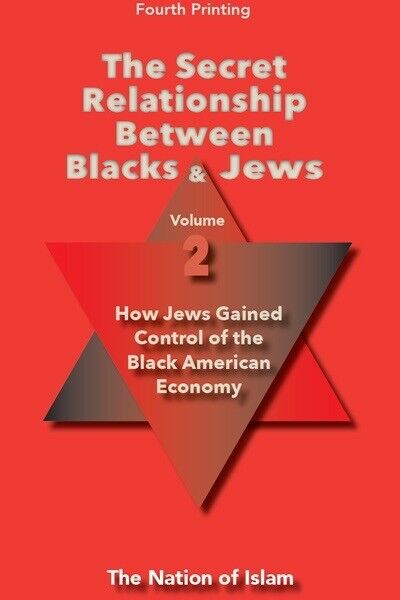
THE SECRET RELATIONSHIP BETWEEN BLACKS AND JEWS VOL. 2
The Secret Relationship Between Blacks and Jews is a three-volume work of pseudo-scholarship, published by the Nation of Islam. The first volume, which was released in 1991, asserts that Jews dominated the Atlantic slave trade. The Secret Relationship has been widely criticized for being antisemitic and for failing to provide...
$48.00
$39.95
The Willie Lynch Letter And the Making of A Slave (Paperback)
Publisher : African Tree Press
Paperback : 28 pages
ISBN-10 : 1592323065
$5.95
$3.95
They Lived Before Adam (Prehistoric Origins of the Igbo The Never Been Ruled) Paperback
The Sensational Book of the Century... They Lived Before Adam delves deep into the valleys of time and showcases the history of the Igbo people Nigeria who have Never been ruled. **Please note: This is an import book and...
$120.00
$74.95
Understanding Black Adolescent Male Violence: Its Remediation and Prevention
Paperback: 92 pages
ISBN-13: 9781879164031
$16.00
$10.00
THE SECRET RELATIONSHIP BETWEEN BLACKS AND JEWS VOL. 3
An accurate accounting of the history of Blacks and Jews from the Columbian era to the Civil War, including the extensive record of Jewish slave trading in the western hemisphere. 334 pages - 1,275 footnotes - More than 3,000 sources...
$49.99
$39.95